Free and low-cost dental care options in Kuala Lumpur
By Sarah · Updated 2026-07-09
Cost is one of the biggest reasons people delay dental care, and it is worth knowing that private clinics are not the only option in Kuala Lumpur. A few lower-cost routes exist, each with different trade-offs worth understanding before you choose one.
Government dental clinics
Malaysia’s public healthcare system includes government dental clinics (klinik pergigian kerajaan) that charge regulated, low fixed fees for consultations, cleanings, fillings and extractions, a fraction of typical private clinic pricing. The trade-off is availability: appointment slots can be limited and wait times longer, especially for non-urgent treatment. Bringing your identification card is generally required for registration.
University dental faculty clinics
Several universities in and around Kuala Lumpur run public dental clinics as part of training dental students, supervised directly by qualified faculty. Treatment is priced well below private clinic rates because it supports the teaching program, and the trade-off is time: appointments run longer since procedures are done carefully under supervision, and case selection sometimes favours conditions useful for training. For routine care where speed is not the priority, this is a genuinely solid lower-cost option.
| Option | Typical cost level | Main trade-off |
|---|---|---|
| Government dental clinics | Lowest, regulated fixed fees | Longer wait times, limited appointment slots |
| University dental faculty clinics | Low, well below private rates | Longer appointments, supervised student treatment |
| Private clinics with payment plans | Full private pricing, spread over time | No cost reduction, but easier to budget for |
| Corporate or NGO dental camps | Often free or heavily subsidised | Limited to specific dates and scope of treatment offered |
Corporate and community dental camps
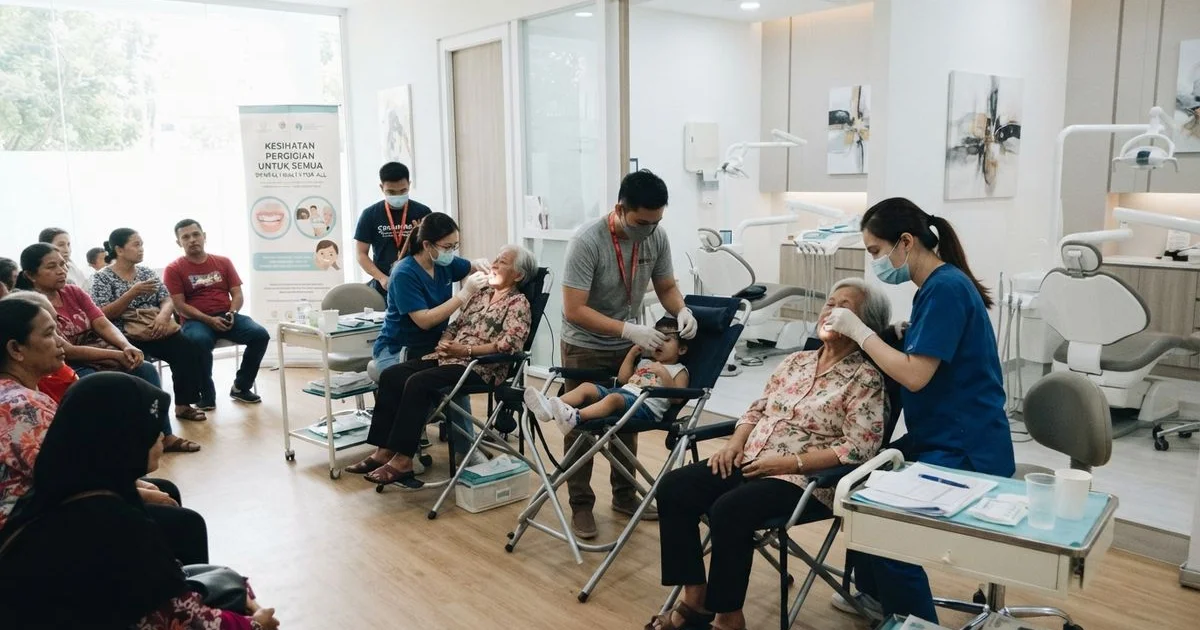
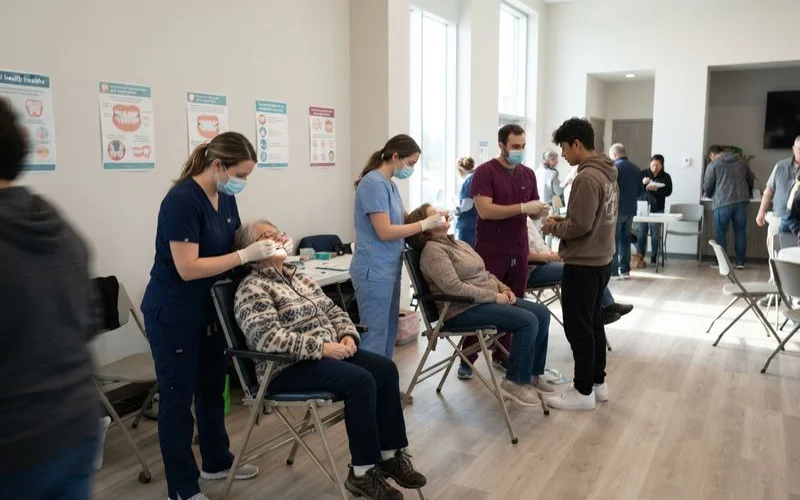
Community health drives and corporate social responsibility events occasionally offer free basic dental screenings, cleanings or simple treatment, often around specific dates rather than year-round. These are worth watching for through community centres, religious institutions or workplace health initiatives, though the scope of treatment is usually limited to screening and basic care rather than complex procedures.
What to bring and how registration works
Government and university clinics generally ask for the same basics: your identification card, any existing dental records if you have them, and patience for a walk-in queue if you have not booked ahead. Some government clinics operate on a first-come, first-served basis for non-urgent visits, so arriving early in the day tends to mean a shorter wait. University clinics more often work by appointment, with an initial screening visit to assess your case before any treatment is scheduled, since case selection for student training is part of how they operate.
Who each option actually suits
Government clinics work best for routine, ongoing care where you can plan around a longer wait, checkups, cleanings, fillings and straightforward extractions. University clinics suit patients who are comfortable with a slower, more thorough process and do not need same-week treatment. Neither is well suited to a genuine emergency, where speed matters more than cost; for that situation, a private clinic, even at full price, is usually the more sensible choice, and worth budgeting for separately from your routine dental care.
If you cannot afford treatment at all
Do not let cost stop you from at least getting a problem assessed. A government clinic consultation is inexpensive and can tell you whether something needs urgent attention or can reasonably wait, which is useful information even if you end up saving up for private treatment afterward. Delaying an assessment entirely because of cost often means a smaller, cheaper problem becomes a larger, more expensive one.
Choosing between lower-cost and private care
If your situation is not urgent and you have some flexibility on timing, government or university clinics are worth genuinely considering rather than treating as a last resort; the clinical standard of care does not drop, only the speed and setting. If you need something addressed quickly, a private clinic with a payment plan may end up being the more practical choice even though the total cost is higher.
For how private clinics in this directory are rated and scored, see the methodology page. Start from the homepage to compare dentists across Kuala Lumpur.
FAQ
- Are government dental clinics in Kuala Lumpur really cheaper than private clinics?
- Yes, significantly. Government clinics (klinik kesihatan and klinik pergigian kerajaan) charge government-regulated rates that are a fraction of typical private clinic pricing, though wait times are usually longer.
- Can anyone use a university dental faculty clinic?
- Generally yes. Dental faculties at local universities treat the public through supervised student clinics at reduced rates, though appointments take longer since treatment is done under teaching supervision.
- Is treatment quality lower at government or university clinics?
- Not in terms of the qualifications involved. Government clinics are staffed by licensed dentists, and university clinics are supervised by qualified faculty. The main trade-offs are wait times and appointment length, not the standard of care.
- What if I need urgent treatment but cannot afford a private clinic?
- Government clinics do take urgent cases, though private emergency clinics will generally see you faster if the situation cannot wait. It is worth calling ahead to explain the urgency either way.