Helping a nervous child feel comfortable at the dentist
By Sarah · Updated 2026-06-27
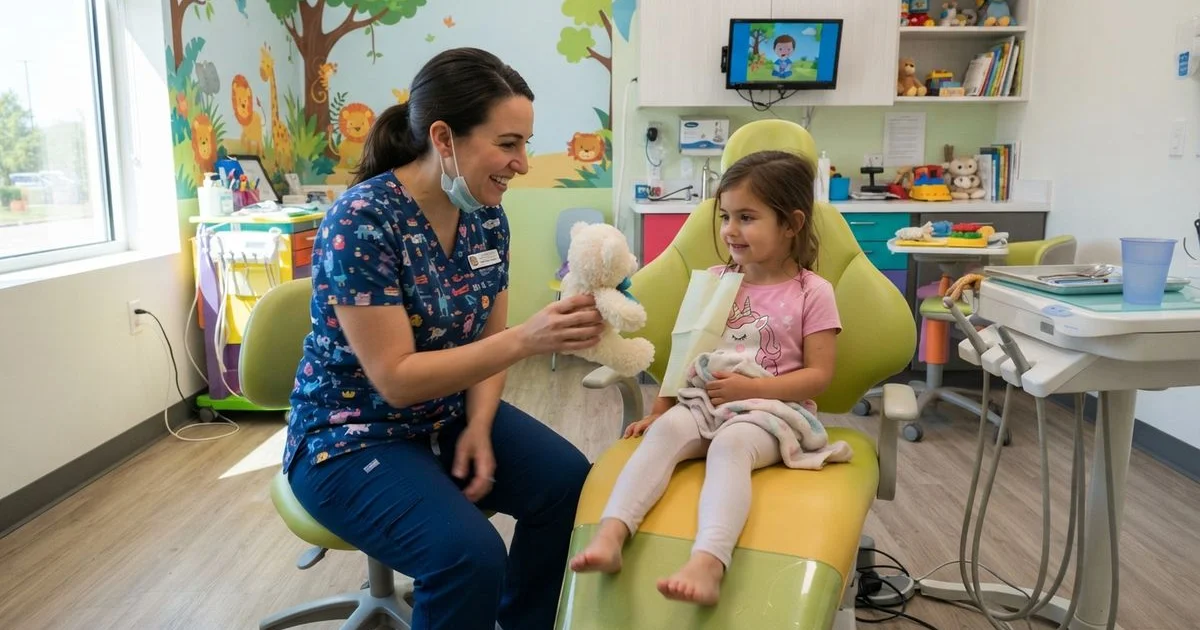
A bad first dental experience can shape how a child feels about dentists for years, which makes the lead-up to that first visit worth getting right. Clinics in the pediatric dentistry category see this daily, and a few small choices before and during the appointment make a real difference.
Before the visit
How you talk about the appointment matters more than most parents expect. Keep the language plain and neutral: the dentist looks at teeth and helps keep them strong. Avoid reassurances that accidentally introduce fear, “it won’t hurt,” “you won’t need a needle,” since a child who was not thinking about pain now is. If your child asks direct questions, answer honestly but briefly, without adding detail they did not ask for.
Bringing a comfort item, a favourite small toy or blanket, and scheduling the visit for a time of day when your child is usually calm and not overtired both help more than people expect.
What a good pediatric visit looks like
| What to look for | Why it matters |
|---|---|
| Dentist explains each step before doing it (“tell-show-do”) | Reduces surprise, which is usually what triggers fear, not the treatment itself |
| Parent allowed in the room | Familiar presence lowers anxiety significantly for younger children |
| Clinic paces to the child, not a fixed schedule | A rushed visit is more likely to end badly |
| Staff comfortable adjusting or pausing if a child is distressed | Forcing through a panicking child usually makes the next visit harder, not easier |
Reviews of clinics that see a lot of children consistently mention this kind of patience and clear, simple explanation as what separates a good pediatric visit from a difficult one.

During the appointment
Let the dental team lead the interaction rather than jumping in to soothe or coach your child through every step; overexplaining from a parent can sometimes ramp up anxiety rather than calm it. Staying visible and calm yourself does more than narrating reassurance. If your child needs a short break mid-visit, a clinic experienced with children will usually accommodate that rather than pushing through.
Handling specific fears
Some children are afraid of a particular thing rather than the visit as a whole: the sound of the drill, the reclining chair, or simply not being able to see what is happening. Naming the specific fear beforehand, if your child can articulate it, gives you something concrete to mention to the clinic. Many pediatric dentists have simple workarounds, sunglasses to block bright lights, headphones for drill noise, a mirror so the child can watch, that solve a specific fear better than general reassurance ever does.
If a first visit goes badly
It happens, and it does not mean your child will always struggle with the dentist. Avoid returning immediately to the same clinic if the fear is tied specifically to that experience. A low-pressure follow-up somewhere else, even a short visit just to sit in the chair, meet the team and look around without any treatment, can help reset the association before attempting actual treatment again. Punishing or bribing heavily around dental visits tends to reinforce the idea that something scary is about to happen, so keep the framing calm and matter-of-fact instead.
Building a routine that avoids fear altogether
Regular checkups from an early age, roughly every six months once a child has teeth, mean less catching up is needed later and fewer surprises during any single visit. A child who is used to the clinic environment from routine visits is far less likely to develop dental anxiety than one whose first visit is for an urgent problem.
It also helps to keep dental care ordinary at home: brushing together as a routine rather than a chore, talking about the dentist neutrally rather than as a threat (“if you don’t brush, you’ll have to go to the dentist”), and modelling calm behaviour at your own appointments if your child ever comes along. Kids pick up on a parent’s own anxiety about the dentist more readily than most parents realise.
Dental anxiety is not only a childhood issue. Choosing dental care for aging parents covers similar patience and pacing considerations for family members at the other end of life.
For how pediatric clinics in this directory are rated, see the methodology page. To browse dentists more broadly, start from the homepage.
FAQ
- At what age should a child first see a dentist?
- Most guidance suggests around the first birthday or within six months of the first tooth appearing, mainly to get the child used to the environment early rather than to treat anything specific.
- How do I prepare my child for their first visit?
- Keep the explanation simple and honest: a dentist counts teeth and helps keep them healthy. Avoid words like pain, hurt or injection even to reassure, since they introduce the idea before your child was worried about it.
- What should I look for in a kid-friendly clinic?
- Ask whether the clinic sees children regularly, how they handle a child who refuses to open their mouth, and whether a parent can stay in the room during treatment.
- My child had a bad first experience. How do I fix that for next time?
- Do not force the next visit to be the same clinic if the fear is tied to that specific experience. A calm, low-pressure visit somewhere else, even just to sit in the chair without treatment, can help reset things before you try again.